
Varsity Jacket Materials: A Smart Buying Guide

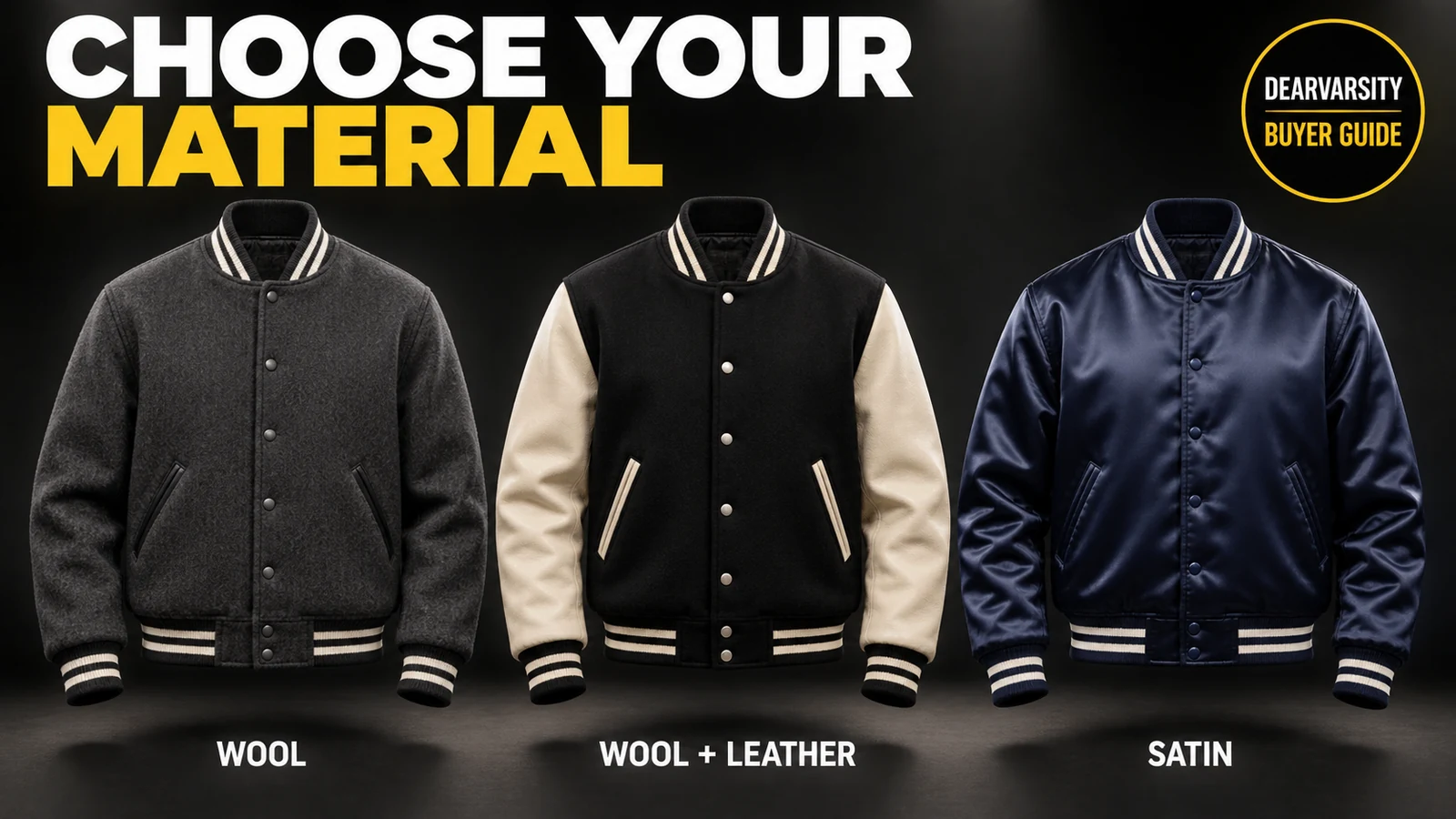
Varsity jacket materials are easier to compare when you separate the body, sleeves and lining. Start with wool or a wool blend if you like a textured appearance, wool with leather sleeves for contrast, or a satin shell for a glossy finish. Then check composition, padding and care before deciding which jacket suits your routine.
Compare the Whole Jacket, Not Just the Name
One product can belong to several material categories. A jacket may have a wool body, leather sleeves and a satin lining at the same time. Calling it a satin-lined jacket does not mean its outside looks shiny; calling it a wool jacket does not tell you what its sleeves are made from.
| Construction | Appearance to look for | Detail to verify before buying |
|---|---|---|
| Wool or wool-blend body and sleeves | Textured, relatively uniform outer surface | Fiber percentages and lining |
| Wool body with genuine leather sleeves | Contrast between fabric and leather | Sleeve material, finish and whole-garment care |
| Wool body with synthetic leather sleeves | Similar two-material visual contrast | Synthetic coating details and wool content |
| Satin outer shell | Smooth surface with reflected highlights | Fiber composition, padding and snag-care advice |
| Full-leather outer shell | Leather across body and sleeves | Leather type, finish, weight and lining |
Use this table to narrow your shortlist. It is not a warmth or durability ranking: two jackets in the same row can have different fabric weights, linings, cuts and construction quality.
Wool and Wool Blends: Read the Composition
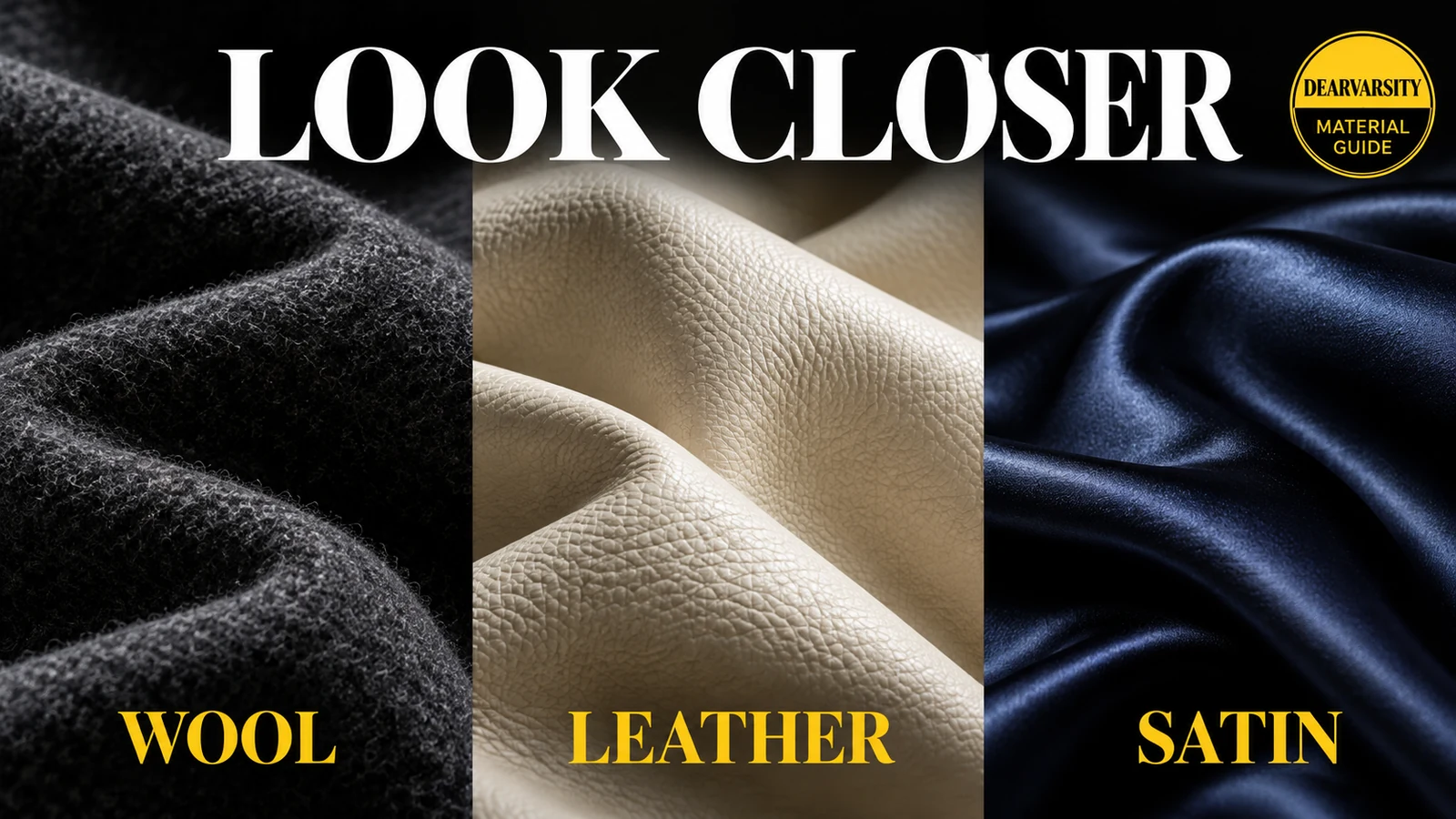
Choose a wool-textured body when you want the fabric surface to be part of the design. It can provide a quieter background for large letters, contrasting ribbing or embroidered details. Look at close-up photographs as well as the full jacket; the texture may be less obvious in a small catalog thumbnail.
Check the listed fiber percentages. A wool blend is not the same composition as 100% wool, and an all-wool category name should not replace the detailed specification. Body fabric, sleeves and lining can each have their own composition. If the listing only says wool without further detail, ask before making a purchase that depends on the exact percentage.
Woolmark explains that wool’s natural crimp helps trap insulating air. That fiber property does not establish a temperature rating for a finished varsity jacket. Fabric density, padding, wind exposure and what you wear underneath all affect whether a particular garment feels comfortable.
Leather Sleeves: Check What the Description Covers
A wool body with leather sleeves creates a visible change in texture at the shoulders. If that contrast is your main reason for choosing a varsity, compare sleeve colors against clothes you already own. Cream sleeves draw the eye differently from black sleeves, even when the two jackets share the same body color.
Read whether leather describes the sleeves alone or the complete outer shell. Also check whether the listing identifies genuine leather, suede or a synthetic alternative. A photograph may show a convincing grain or sheen without resolving the material. Avoid making the purchase on the assumption that every leather-look sleeve has the same composition or care needs.
Browse wool and leather varsity jackets for this combination, then confirm the individual product details. Do not apply a conditioner to a mixed-material jacket unless its maker recommends that treatment for the specific finish and construction.
Does Faux Leather Make the Whole Jacket Vegan?
Not necessarily. Synthetic sleeves can be paired with a wool body, so avoiding genuine leather does not establish that the entire garment is free of animal-derived materials. If that matters to your purchase, check the body, sleeves, lining and trims, and ask the seller to confirm anything the listing leaves unclear.
Satin: Distinguish the Shell from the Lining
Satin describes a fabric construction associated with a smooth, lustrous surface; the word alone is not enough to establish the fiber content of a retail jacket. CottonWorks’ explanation of satin weave connects that appearance to the longer floats in the weave and notes snagging as a potential concern.
For a glossy outer appearance, look for satin in the shell description. A satin lining is inside the garment and can appear beneath a wool or leather exterior. Check both fields rather than searching the product page for the word satin and assuming it refers to the outside.
Explore satin varsity jackets when that sheen suits your wardrobe. Compare close-ups of the surface and photographs of the interior. Do not assume every satin jacket is an unpadded summer layer, machine washable or made from silk; those are separate specifications to verify.
Lining and Padding Change the Decision
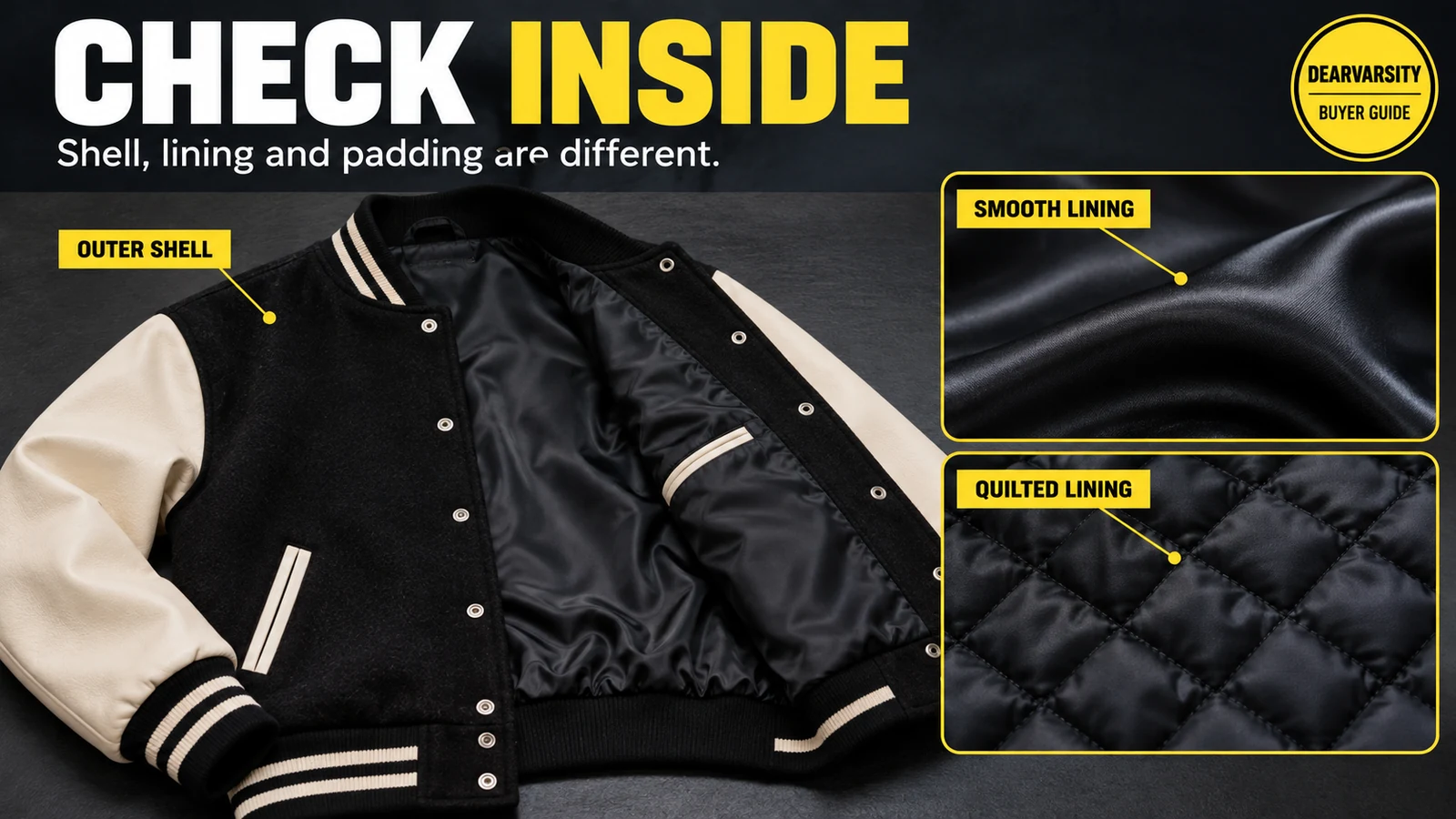
The outer shell is only one part of a jacket. A smooth lining, a quilted lining and added insulation describe different things. Quilting is a stitched construction; its appearance alone does not reveal the amount or type of filling. Look for an explicit padding or insulation description when warmth is important.
Think about one typical day of use. For frequent transitions between a warm car and indoor spaces, an easy-to-remove layer may matter more than maximum bulk. For extended time outdoors, check the complete insulation and weather-protection specification. A varsity silhouette or a leather sleeve is not proof that a jacket is waterproof.
A Five-Point Checklist Before You Order
- Write down the construction. Identify body, sleeves, lining and padding separately. Mark anything the listing does not explain.
- Choose your everyday layer. A tee and a thick hoodie require different room. Use the DearVarsity size guide and keep body measurements separate from garment measurements.
- Check movement and length. Compare with a jacket you wear comfortably. Our varsity jacket fit guide explains the relevant checks.
- Read the care instructions. The finished jacket includes trims and decorations as well as fabric. Follow its label rather than a general rule for wool, leather or satin.
- Plan two outfits. Pick pants, footwear and a base layer you already own. The men’s varsity styling guide offers five starting combinations.
Choose the jacket whose verified construction matches your clothing, routine and willingness to care for it. If two options look similar, a clear material specification and usable measurements are more helpful than an unqualified premium label. Resolve missing details before checkout rather than guessing from the price or photograph.
FAQs
What Is the Best Material for a Varsity Jacket?
There is no single best material for everyone. Start with your preferred texture and appearance, then compare the full construction. A wool-and-leather combination, a uniform wool-textured shell and a glossy satin shell offer different looks; lining, fit and care determine whether a specific option works for you.
Is a Wool Varsity Jacket Warmer Than Satin?
The material names alone cannot settle the comparison. A substantial wool fabric and an unpadded satin shell are different constructions, but a satin jacket may also contain insulation. Check fabric weight, lining and filling before drawing a conclusion, and avoid relying on an unspecified winter label.
Can a Satin-Lined Jacket Have a Wool Exterior?
Yes. Shell and lining are separate parts. A product can have wool on the outside and a smooth satin lining inside. Read which component each material describes so that an interior feature does not drive your expectation of the jacket’s visible finish.
Can You Wash All Varsity Jacket Materials the Same Way?
No. Follow the care instructions for the complete garment, including its sleeves and decorations. Our varsity jacket washing guide covers the questions to check before cleaning. If the label is missing or unclear, ask the seller or a cleaner familiar with mixed-material garments.