
How Should a Varsity Jacket Fit?

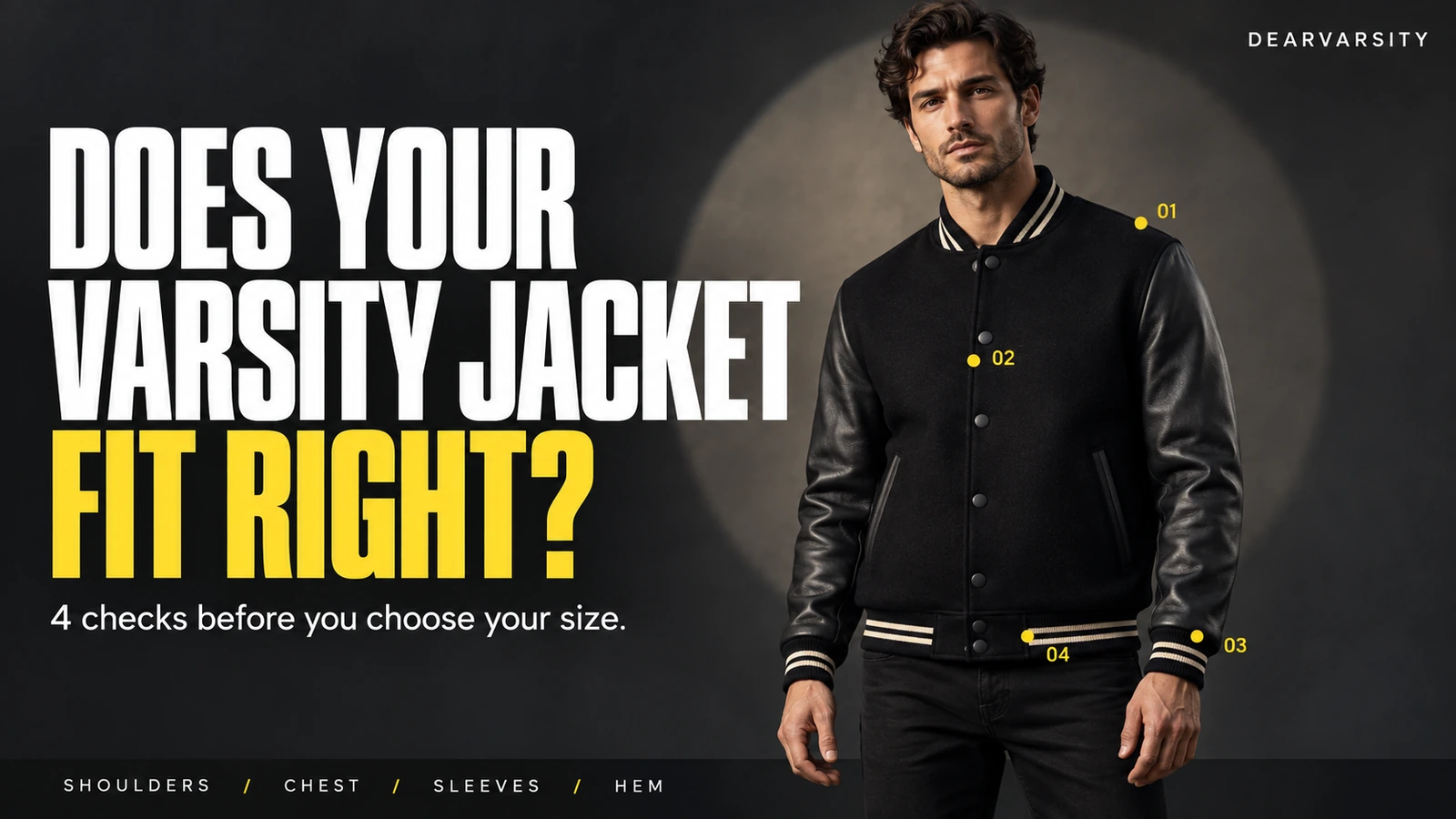
A varsity jacket should allow comfortable arm movement, with enough chest room for your planned layers. Check sleeve length and shoulder fit, then assess jacket length against your chosen cut, whether regular, oversized, or cropped.
Check Your Varsity Jacket Fit
Shoulder Fit
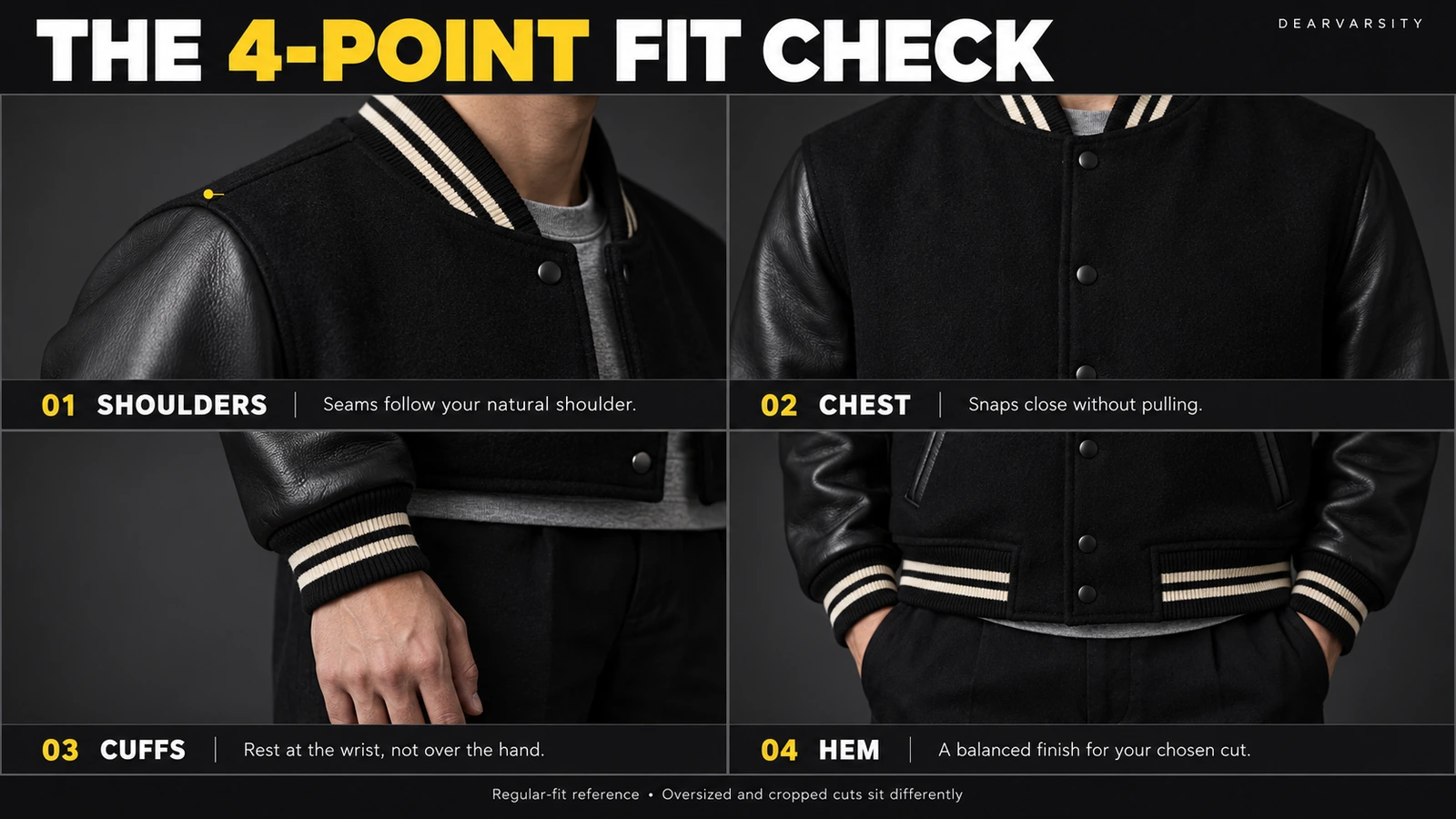
For a regular fit, shoulder seams should sit near your natural shoulder line. Reach forward to check for pulling across the upper back. Oversized styles may have dropped shoulders, so judge them by their design.
Chest and Closure
Close the jacket over your usual layers. The front closure should lie flat without gapping between snap buttons. Check chest comfort while sitting and reaching forward, allowing enough layering room without restricting your normal breathing.
Sleeves and Cuffs
Your ribbed cuffs should rest around the wrist bone without covering your hands. Bend your elbows and reach forward to check sleeve length, ensuring leather sleeves allow comfortable elbow movement without tightness around your biceps.
Jacket Length and Hem
Classic styles often finish near the waistline or high hip, while cropped and longer cuts sit differently. Check jacket length against your torso length, ensuring the ribbed hem feels comfortable when standing and sitting down.
Fit Styles
A slim fit sits closer to your body, while regular fit offers more room. Relaxed fit accommodates layers, and oversized fit adds deliberate volume. Choose the silhouette you prefer without sacrificing comfort or easy movement.
Measure Before Choosing Your Size
Body Versus Garment Measurements
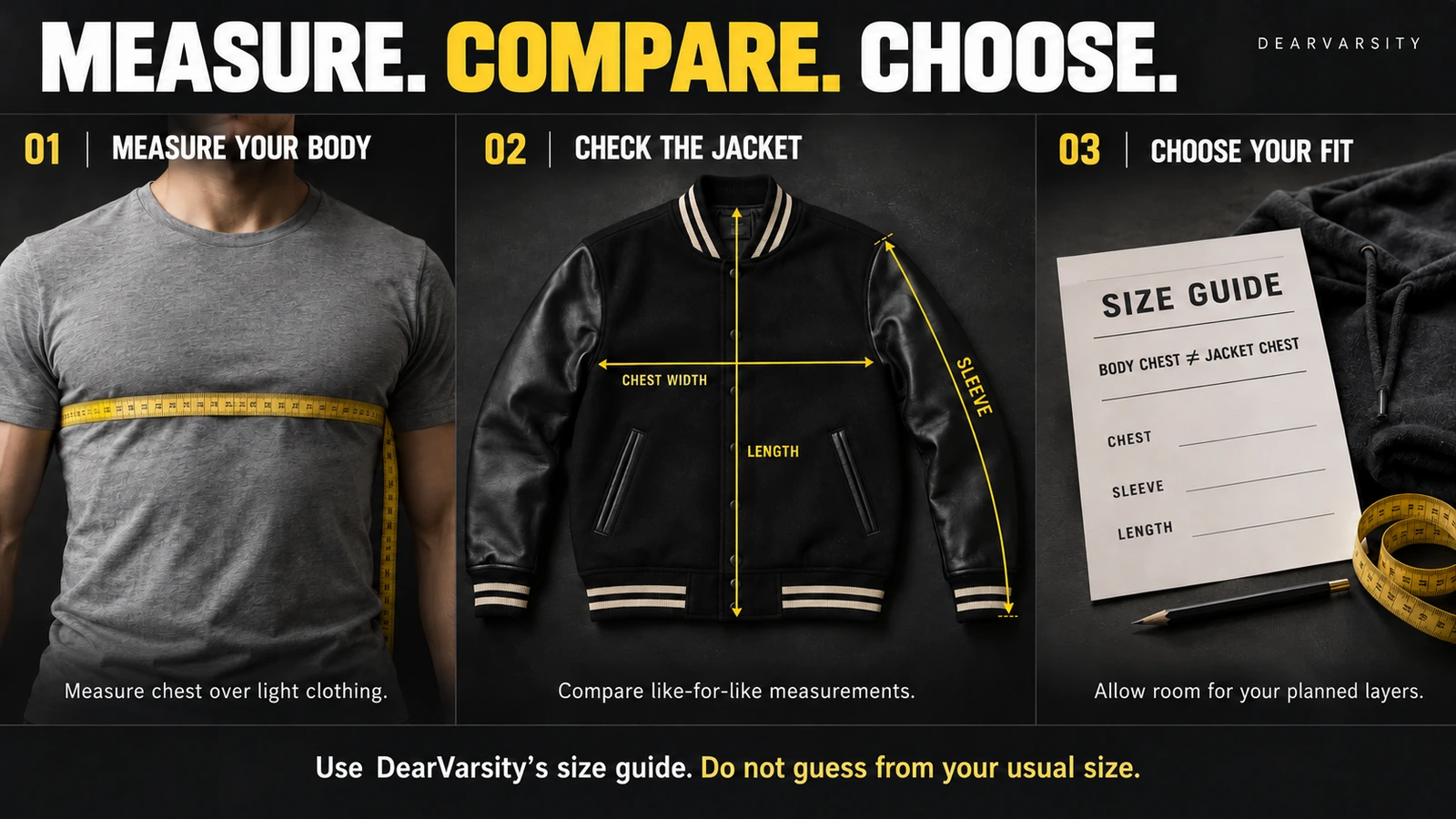
Body measurements describe your frame; garment measurements describe the jacket. Dear Varsity’s men’s size chart lists both. Compare your chest circumference with the suitable chest range, keeping actual jacket measurements separate when selecting your size.
Chest Measurement
Wrap a flexible measuring tape around the fullest part of your chest, passing beneath your underarms. Keep the tape level over light clothing, breathe normally, and avoid pulling it tight before recording your chest circumference.
Shoulder Width
Ask someone to measure your shoulder width across your back, from one shoulder edge to the other. Keep your posture relaxed, then compare the measurement with Dear Varsity’s size chart to help assess shoulder fit.
Sleeve Length
Measure sleeve length from the shoulder seam down to your wrist, following Dear Varsity’s size guide. Keep your arm relaxed and compare this measurement with the chart’s shoulder to cuff value for your selected size.
Body Length
Measure from the base of your neck to your preferred jacket hem, following Dear Varsity’s guide. Compare this body length with the chart, considering your torso length and the intended proportions of your chosen style.
Waist
Measure around your natural waist with a flexible measuring tape, keeping your stomach relaxed. The women’s chart includes waist measurements. For other cuts, ask sizing support if you need help assessing comfort around your midsection.
Measuring a Jacket You Already Own
Button an existing jacket closed, lay it flat, and measure chest width below the underarms. Double this measurement to estimate circumference, then compare it with the chart’s actual jacket chest measurement, not suitable chest size.
Between Sizes
If you fall between sizes, compare your chest, shoulder, and sleeve measurements together. Dear Varsity recommends choosing one size larger for a relaxed fit or thicker layers. Ask for sizing support if measurements still conflict.
Layering
Try your jacket over the hoodie or sweatshirt you plan to wear. Close the front, then check chest room and arm movement. Your layers should fit comfortably without bunching or creating pressure around the underarms.
Finding the Right Fit for Your Proportions
Men’s Fit
For men’s fit, compare your chest and shoulder measurements first, then check sleeve length and body length. Choose a cut that accommodates your torso and upper arms without forcing the front closure to pull apart.
Women’s Fit
For women’s fit, check bust comfort with the jacket closed, then assess shoulder alignment and sleeve volume. Choose your preferred hem position while allowing comfortable movement across the upper back and around your planned layers.
Conflicting Chest and Sleeve Sizes
If your chest size matches one size but your sleeve length matches another, avoid choosing blindly. Share both measurements with sizing support so your body proportions and preferred fit can guide a more suitable recommendation.
Tall Frames
For taller frames, check body length and sleeve length alongside chest width. A larger size may add unwanted room through the torso, so compare all measurements before deciding whether the jacket’s proportions suit your build.
Try-On Checklist
Fully close your jacket, then sit down, cross your arms, and reach forward. Check for underarm pressure, closure strain, or excessive bunching. The collar should rest comfortably while cuffs leave your hands free to move.
FAQs
Should a Varsity Jacket Fit Tight or Loose?
A varsity jacket should feel comfortable rather than restrictive. Your preferred fit determines how much room it has, but the front closure should stay flat and allow easy movement over the layers you normally wear.
Should I Size Up or Down for a Varsity Jacket?
Start with your measurements and Dear Varsity’s size chart. For a relaxed fit or thicker layers, the size guide recommends going one size larger. If different measurements suggest conflicting sizes, contact sizing support before ordering.
Do Varsity Jackets Run Large or Small?
Varsity jackets vary by brand, cut, and construction, so your usual size label may not predict the fit. Compare your body measurements with the relevant size chart and check product notes before selecting your size.
Can You Wear a Hoodie Under a Varsity Jacket?
Yes, provided your jacket has enough layering space through the chest, shoulders, and sleeves. Try it over your hoodie, close the front, and check arm movement without tightness or bunching around your back and underarms.
How Should an Oversized Varsity Jacket Fit?
An oversized fit adds intentional room through the shoulders, chest, and sleeves. It should still allow comfortable movement, keep your hands clear, and suit your preferred proportions without the jacket constantly slipping out of place.
Can I Measure a Jacket I Already Own?
Yes, measure an existing jacket laid flat, then compare its garment measurements with the chart’s actual jacket measurements. Keep chest width separate from circumference, and use the same measuring points for shoulders, sleeves, and length.